 Back to Nova Southeastern University


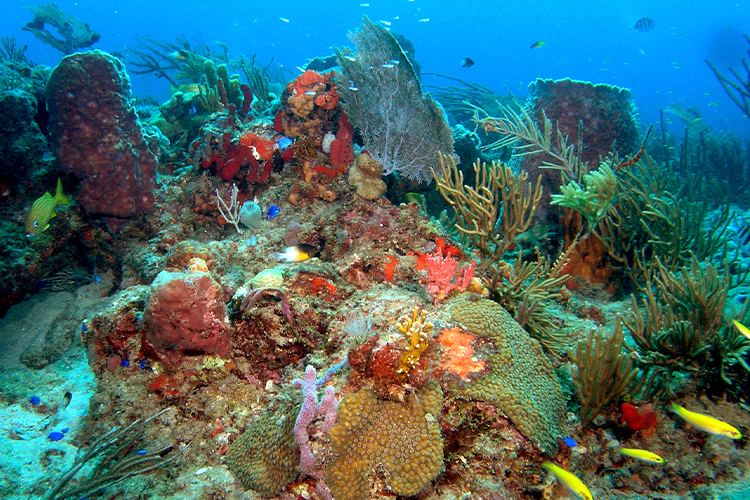
The 2024 Susan L. Williams National Coral Reef Management Fellowship program is a partnership between Nova Southeastern University’s National Coral Reef Institute, NOAA’s Coral Reef Conservation Program, the U.S. Department of Interior Office of Insular Affairs, and the U.S. Coral Reef All Islands Committee.
The program recruits Coral Reef Management Fellows for the seven U.S. coral reef jurisdictions (American Samoa, the Commonwealth of the Northern Mariana Islands, Florida, Guam, Hawaii, Puerto Rico, and the U.S. Virgin Islands) to address current capacity gaps and to build longer-term capacity in these locations. This is done by placing highly qualified individuals whose education and work experience meet each jurisdiction’s specific coral reef management needs. The program’s goal is to develop a thriving collaborative fellowship program that builds excellent next-generation leaders and capacity for effective local coral reef ecosystem management.
How to Apply
Prospective applicants will apply directly through Nova Southeastern University's online portal. Fellows are employed directly through NSU, but will be located onsite at each host agency. The fellowship is a partnership funded by the National Oceanic and Atmospheric Administration and the U.S. Department of the Interior.
The application period will be open from now through 12:00 midnight EDT on Sunday, November 2, 2025. Applicants may save information entered on their partially completed application form on each page. Applications not submitted through the NSU portal will not be accepted. Prospective applicants will be required to create an account on the application online portal. Through this application form, they will provide personal information, education and employment history, and references.
In addition to these sections, applicants may provide a cover letter and resume. Prospective applicants may apply for more than one jurisdictional position, but a separate application must be submitted for each position. Prospective applicants should note that this is a management and policy-focused fellowship, and that SCUBA diving will not be permitted. Prospective applicants for the 2026-2028 fellowship positions will be able to access applications for the following jurisdictions:
• American Samoa
• Commonwealth of the Northern Mariana Islands (CNMI)
• Florida
• Guam
• Hawaii
• U.S. Virgin Islands
Meet the 2024-2026 Fellows
Riley Garvey is originally from Myrtle Beach, South Carolina and received his B.S.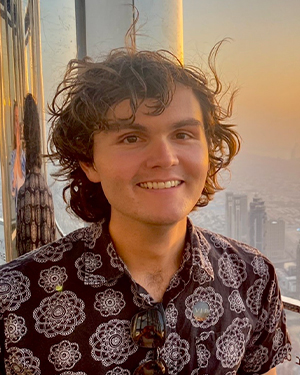 in Biosystems Engineering from Clemson University and has spent more than two years
working in many aspects of coral restoration in the Florida Keys.
in Biosystems Engineering from Clemson University and has spent more than two years
working in many aspects of coral restoration in the Florida Keys.
As the American Samoa Coral Fellow, Riley will be working with the Coral Reef Advisory Group to install and monitor restoration interventions at sites around the island of Tutuila. He will monitor new and existing interventions for success and use what is learned to help inform updates to American Samoa’s Action Plan for Coral Reef Restoration. Riley will also build on the work of previous Coral Fellows to increase local capacity for coral restoration by continuing to engage community members in restoration work.
Originally from California, Bailey Warren received her B.S. in Biology from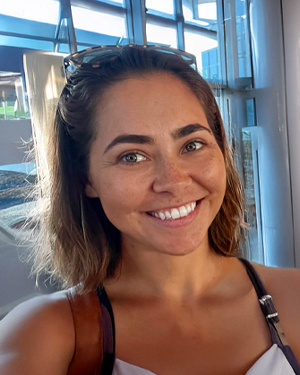 California State University, Monterey Bay and her M.A. in International Environmental
Policy with a focus on Ocean and Coastal Resource Management from at the Middlebury
Institute of International Studies.
California State University, Monterey Bay and her M.A. in International Environmental
Policy with a focus on Ocean and Coastal Resource Management from at the Middlebury
Institute of International Studies.
As the Coral Fellow in Saipan, CNMI, Bailey will work to produce an updated strategic communications plan for the Commonwealth’s Coral Reef Initiative that will include a standard framework for the Initiative and an execution plan for the CRI’s various communication needs and outreach programs. The overall goal of the project being to raise community awareness of climate change impacts on the local reefs and associated ecosystems and, in turn, foster behavior changes and improve stewardship of the CNMI’s reefs. Additionally, upon completion of this plan, Bailey will assist in plan implementation by developing targeted messaging for selected outreach materials/programs.
Raised in Northwest Indiana, Allison received her B.S. in Marine Biology from the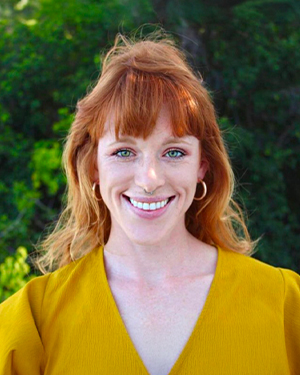 University of Rhode Island and her M.S. in Environmental and Environmental Science
at the University of the Virgin Islands.
University of Rhode Island and her M.S. in Environmental and Environmental Science
at the University of the Virgin Islands.
As the Coral Fellow in South Florida, Allison will draw upon her background in marine ecology, coral restoration, and mangrove restoration to help allocate funding for the expansion of Florida's coral restoration and propagation efforts. This includes working with state and federal partners, as well as universities and non-government organizations to help translate ongoing research into management practices.
Sabrina is originally from Orange County, California, and received her B.S in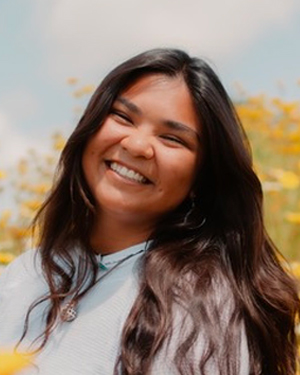 Marine Biology from the University of Hawaii at Manoa and her M.S. in Conservation
and Restoration Science at the University of California Irvine.
Marine Biology from the University of Hawaii at Manoa and her M.S. in Conservation
and Restoration Science at the University of California Irvine.
As the Coral Fellow in Guam, Sabrina will be compiling strategies for best practices in coral reef related outreach and education. She will focus on organizing a forum for stakeholders to discuss collaborative opportunities and foster student engagement in educational programs to involve the community in managing Guam's natural resources. Sabrina will also be supporting Guam Coral Reef Initiative in the development of related activities and assisting in coral reef conservation programs.
Ellie was born in Oregon, and received her B.S. in Marine Biology from the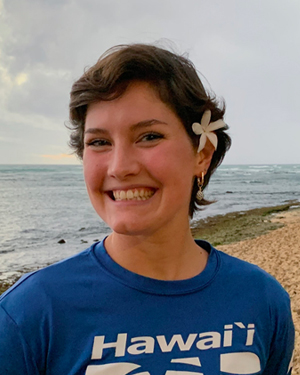 Oregon Institute of Marine Biology at the University of Oregon. She values doing
work that benefits both coral reefs and the people who depend on them and has applied
this over the years in her work as a science communicator and marine researcher.
Oregon Institute of Marine Biology at the University of Oregon. She values doing
work that benefits both coral reefs and the people who depend on them and has applied
this over the years in her work as a science communicator and marine researcher.
As the Coral Fellow for Hawai'i, Ellie will be working with the State of Hawai'i Division of Aquatic Resources focusing on water quality monitoring and management for nearshore ecosystems. She will use a ridge to reef approach for this work, engaging various watershed organizations and stakeholders to ensure a collaborative effort.
Originally from Washington, DC, Alex received her B.A. in Biology and Earth &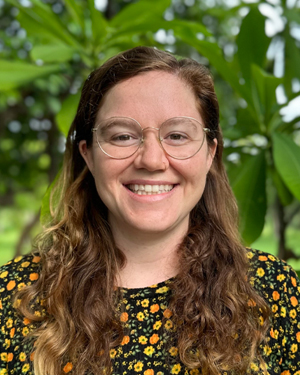 Environmental Sciences from Wesleyan University and her M.S. in Marine & Estuarine
Environmental Sciences from the University of Maryland Center for Environmental Science.
Environmental Sciences from Wesleyan University and her M.S. in Marine & Estuarine
Environmental Sciences from the University of Maryland Center for Environmental Science.
As the US Virgin Islands Coral Fellow, Alex will work with the Division of Coastal Zone Management in the St. Croix East End Marine Park (EEMP). Alex will be facilitating the Virgin Islands Restoration of Coral Squad in implementing the USVI coral restoration plan created in 2023. This will include implementation of coral rescue software, tracking progress towards restoration targets, and summarizing annual rescue efforts. She will also assist with EEMP community engagement initiatives such as Reef Week, sea turtle nesting beach patrols, seagrass patrol, and management of the park’s demonstration coral restoration site.
Roxana Aslan, born and raised in Los Angeles, CA, received her B.S. in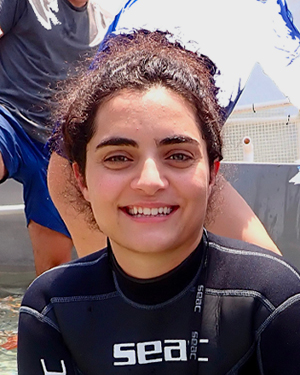 Environmental Science and Health from the University of Southern California, her
Masters in Urban and Regional Planning from UCLA and her M.P.S. in Marine Biology
and Ecology from the University of Miami.
Environmental Science and Health from the University of Southern California, her
Masters in Urban and Regional Planning from UCLA and her M.P.S. in Marine Biology
and Ecology from the University of Miami.
As the Puerto Rico Coral Fellow, Roxana will be working with the Department of Natural
and Environmental Resources through the Coral Reef Program to consolidate information
regarding coral rescue and restoration efforts in Puerto Rico, establish a standard
operating procedure for acquiring permits relevant to each type of coral restoration
effort and continue to promote awareness regarding coral reef emergency responses.
She will promote continual collaborations between research, education rescue, and
management groups to promote successful coral rescue and restoration efforts on the
island.
Frequently Asked Questions
Applicants must be a U.S. citizen or U.S. permanent resident. Applicants typically have a master's degree and two years of experience or a bachelor's degree and four years of experience. Jurisdictions may require additional or alternate skills, such as outreach and education experience. Jurisdictions may set other specific eligibility requirements which are provided when new fellows are being recruited, listed in individual job descriptions accessible via the NSU application portal.
The fellowship is a two-year position. After final applicants are selected, fellows relocate to their jurisdiction in mid-January of their start year, and then participate together with their jurisdictional supervisors and fellowship leadership team in a orientation training in February of their start year.
Fellows receive a non-negotiable yearly salary. The salary varies, depending upon location, and will remain the same for the duration of the fellowship.
There is a standard benefits package that includes paid NSU holidays, leave, and medical benefits. Funding is also provided to support professional development and training that is relevant to the fellowship. Relocation funds are allocated for this position.
Prospective applicants may apply for more than one jurisdictional position, but a separate application must be submitted for each position.
Partners
The Fellowship is a partnership between NOAA Coral Reef Conservation Program, the Department of the Interior, All Islands Coral Reef Committee, and the Nova Southeastern University Oceanographic Center.
The Department of the Interior strengthens management of coral reef ecosystems, as a part of the Coral Reef Initiative Program in the Office of Insular Affairs (OIA) through grants to the U.S. Insular Areas. On behalf of the Secretary, the Assistant Secretary for Insular Areas coordinates federal policy and carries out administrative responsibilities through OIA whose mission is to foster economic opportunities, promote government efficiency, and improve the quality of life for the people of the insular areas.
The NOAA Coral Reef Conservation Program was established in 2000 by the Coral Reef Conservation Act to protect, conserve, and restore the nation's coral reefs by maintaining healthy ecosystem function. The NOAA Coral Reef Conservation Program is an interdisciplinary effort of NOAA scientists and partners with state and territorial governments with coral reef resources, non-governmental organizations, academia, and local communities to inform effective coral reef resource management and best practice conservation science.
Nova Southeastern University's Halmos College of Arts and Sciences has offered a marine science program to create new knowledge about the ocean. The waterfront campus near Port Everglades, Florida and state-of-the-art NSU Guy Harvey Oceanographic Center boasts a seawater system and outside experimentation facility. Research includes fisheries, oil spills, climate change, biodiversity, conservation genetics, coral reefs, and the deep sea. The NSU Halmos College partners with local, state and federal agencies in natural resource management driven research.
The U.S. All Islands Coral Reef Committee is a unified voice for the effective management for coral reef ecosystems in the U.S. and freely associated states. The U.S. All Islands Coral Reef Committee (AIC) ensures coordination and cooperation within and among State, Commonwealth, and Territorial agencies, along with Freely Associated States. Working together with federal agencies and partners, we are able to better manage and protect coral reef ecosystems for present and future generations.
Fellowship News and Updates
Read the National Coral Reef Management Fellows Newsletter for the most recent highlights, professional development news, and reflections shared by our current cohort of fellows. You can also explore the complete history of the program and its achievements in the newsletter archives.
Have a Question?
Email Wendy Wood at wendyw@nova.edu.