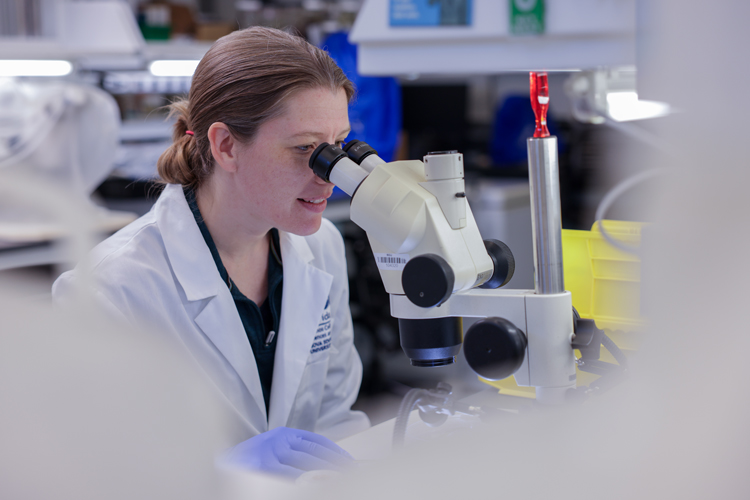
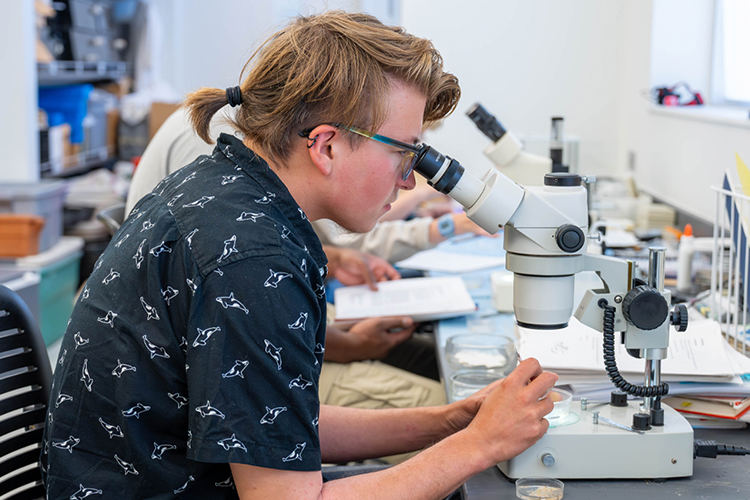
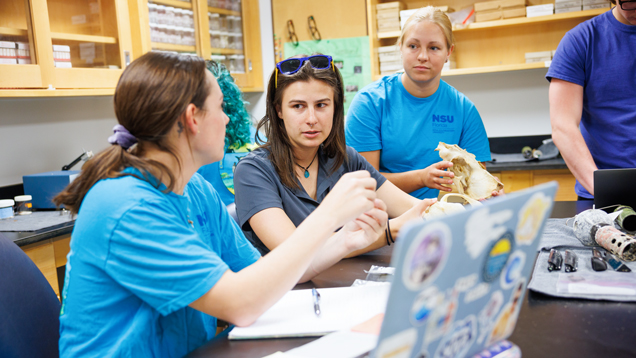
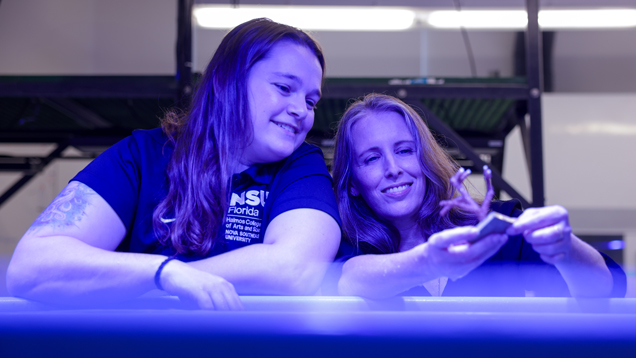
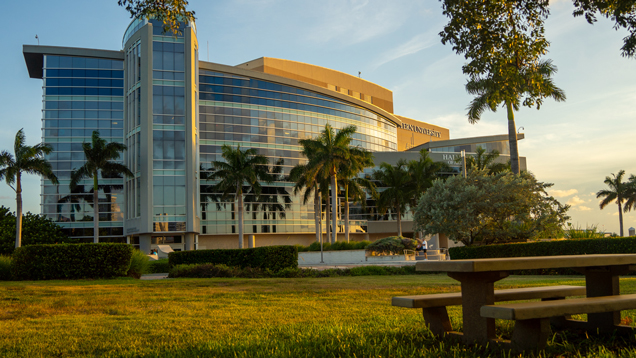
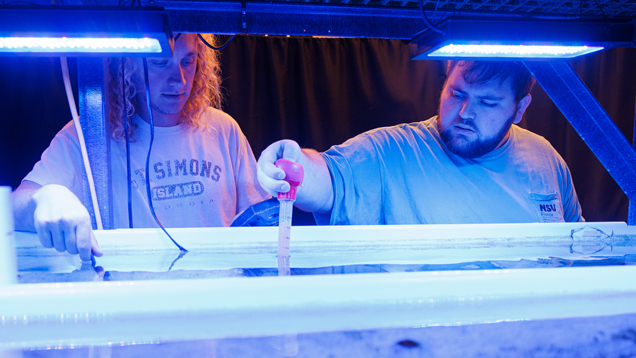
At the Nova Southeastern University Halmos College of Arts and Sciences, research isn't just a pursuit—it's a journey of discovery that spans the natural sciences, social sciences, humanities, and arts, including many emerging interdisciplinary fields.

Our vibrant community is actively engaged in:

  • Experiential learning for undergraduates
  • Original research opportunities for all students
  • Cutting-edge discoveries led by world-renowned faculty

Beyond scientific inquiry, our college is a hub for scholarly and creative expression, producing acclaimed art, performances, poetry, fiction, and impactful publications addressing societal challenges. 

NSU Halmos College of Arts and Sciences Fast Facts

icon
$17,570,997
in Grant Money Awarded to NSU Halmos College Faculty & Staff
icon
7,030
NSU Halmos College Alumni since 1999
icon
1,193
Publications Produced by NSU Halmos College Faculty & Staff
icon
114
 Full-time Faculty


All Laboratories


Filter By:

All

Charismatic Megafauna and Oceanography Lab (CMOL)

Charismatic Megafauna and Oceanography Lab (CMOL)

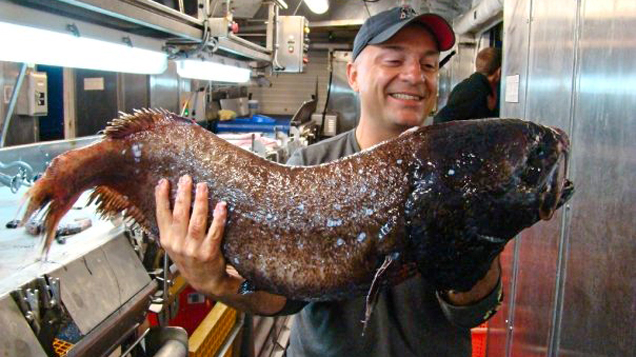
Our research focuses on ocean energetics with an emphasis on trophic dynamics and how the physicality of the aquatic environment impacts energy flow in biological organisms. Food webs that transfer energy to organisms contain nutrients as well as inorganic and organic contaminants, and CMOL studies flora and fauna as bioindicators of what is happening in the environment.

Gain First-Hand Knowledge of Ocean Megafauna
Computational Biology Laboratory

Computational Biology Laboratory

This research lab focuses on understanding the physical and biological processes driving marine invasions by exotic species. This knowledge is gained through the use of agent-based computer models that couple ocean characteristics with life-history traits of the invader.

Study the Impact of Invasive Species
Conservation Biology and Genetics Laboratory

Conservation Biology and Genetics Laboratory

Conservation Biology is an interdisciplinary science that applies field and genetic research methods to the understanding, conservation, and management of marine species.

Conduct Hands-On Conservation Research
CRRAM Laboratory

CRRAM Laboratory

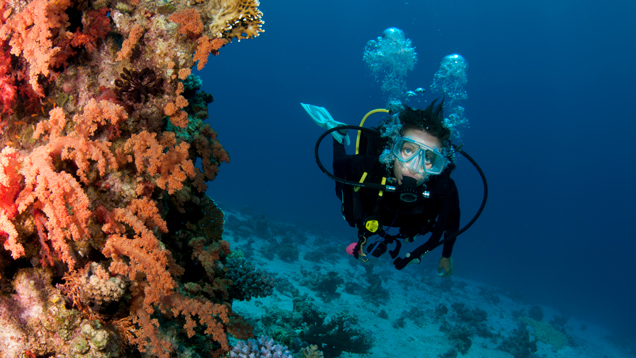
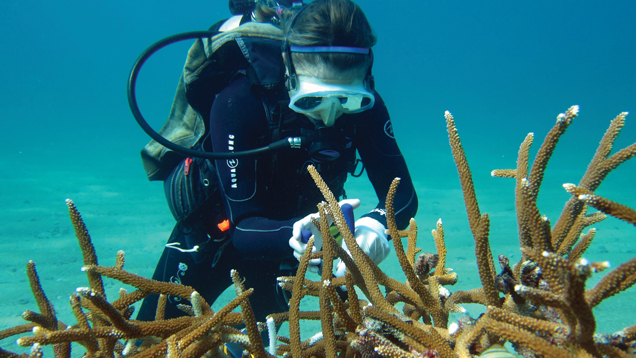
Research on coral reef ecology with an emphasis on restoration, assessment, and monitoring (CRRAM) includes investigating the ecology, restoration, and conservation of staghorn coral (Acropora cervicornis) populations. The lab has a strong resource management focus and works closely with local, state, and federal agency resource managers.

Protect Coral Reef Health
Deep Sea Biology Laboratory

Deep Sea Biology Laboratory

This research focuses on the visual physiology of deep-sea animals; specifically, zooplankton ecology, with emphasis on the effects of downwelling light on their daytime distribution patterns and vertical migrations.

Explore Deep Sea Biology
Ecology, Evolution and Environment Lab

Ecology, Evolution and Environment Lab

The Ecology, Evolution, and Environment laboratory has been established to provide researchers on the NSU main campus opportunity to work on scientific research questions in the environmental field. The laboratory is used by Dr. Hoch and other faculty for their research projects, by several graduate students for their thesis research, and by undergraduates working with Razor's Edge on environmental questions or for independent research credits

Explore Research Opportunities
Fisheries and Avian Ecology Laboratory

Fisheries and Avian Ecology Laboratory

Fisheries research at the Halmos College of Arts and Sciences has historically focused on the commercially and recreationally important coastal and pelagic fishes, including billfish, tunas, and swordfish. Fisheries science is the discipline of managing and understanding the harvesting of aquatic species, including finfish. It is a multidisciplinary field, which draws on aspects of oceanography, ecology, engineering, ichthyology, socio-economics, and management to provide an integrated picture of fisheries and their effects on the environment.

Understand Fisheries Science
Giarikos Environmental Chemical Contaminant (GECC©) Chemistry Laboratory

Giarikos Environmental Chemical Contaminant (GECC©) Chemistry Laboratory

The GECC© Laboratory investigates the impacts of chemical contaminants (trace elements and both inorganic and organic compounds) on aquatic environments through the analysis of water, sediments, and biological indicators across marine and freshwater systems. Working from field sites spanning the globe, the lab collaborates closely with experts in marine biology, chemistry, and genetics to explore trophic dynamics and inform best management practices for vulnerable ecosystems.

Investigate Contaminant Chemistry
GIS and Spatial Ecology Laboratory

GIS and Spatial Ecology Laboratory

Utilization of Geographic Information Systems (GIS) as a tool to study the ecology, distribution, and spatial arrangement of benthic (sea bottom) coastal and ocean habitats and marine organisms to provide maps and other spatial information for enhancement of knowledge, conservation, and resource management.

Apply Geographic Information Systems to Our Oceans
Marine Larval Ecology Laboratory

Marine Larval Ecology Laboratory

This lab's research aims to increase our understanding of the environmental factors that are hampering the recovery rates of coral populations and to study how recovery rates can be bolstered by management actions.

Help Coral Reefs Recover
Microbiology Laboratory

Microbiology Laboratory

Applying and advancing modern biotechnology and genomic (complete hereditary material) sciences for a better understanding of marine organisms and their functions. This research lab was instrumental in creating the first Global Invertebrate Genomics Alliance (GIGA), which aims to spearhead genomics research of overlooked and cryptic invertebrate species, including those that live on coral reefs.

Explore Marine Organisms Through Genomics
Oceanic Ecology

Oceanic Ecology

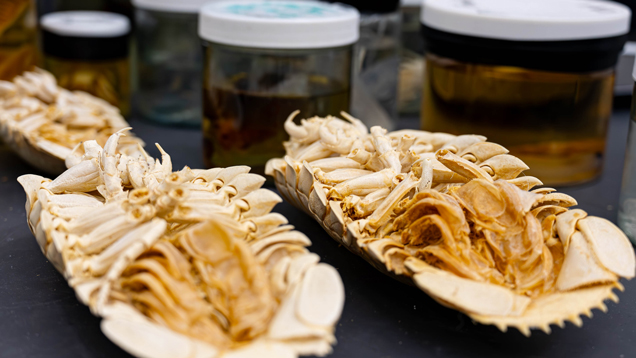
Research in this lab focuses on the ecology of marine ecosystems, particularly those of the open ocean. The research focus is primarily interested in the connectivity of a variety of trophic levels, from the surface to great depths, with emphasis on the fauna and ecology of the deep-pelagic zone (200 to >5000 m depth).

Research Marine Ecosystem Ecology
Scleractinian Coral Biology

Scleractinian Coral Biology

This research focuses on scleractinian coral biology, conservation, and restoration, with an emphasis on experimental evaluation of the impacts of climate change, ocean acidification, and land-based sources of pollution on coral biology and ecology.

Understand and Protect Scleractinian Coral
Seascape Ecology Laboratory

Seascape Ecology Laboratory

In the Seascape Ecology lab at Nova Southeastern University, we are working to understand the spatial and temporal distributions and biodiversity patterns of deep-sea fishes and other deep-living fauna both in the water column and at the seafloor and translate our research findings into useable products for marine resource managers.

Explore Deep Sea Fauna
Stony Coral Laboratory

Stony Coral Laboratory

Sclerochronology is the study of the time-dependent growth of the coral skeleton for the reconstruction of past environmental and climate histories of the ocean.

Gain an In-Depth Understanding of Corals
Systems Biology and Geology Lab

Systems Biology and Geology Lab

Our research focuses on understanding environmental changes through two primary avenues: (1) examining climate change on the North American Great Plains during the Quaternary Period, and (2) investigating environmental challenges related to contaminated marine sediment in nearshore environments

Learn More About Our Research