Back to Nova Southeastern University



In a world marked by escalating conflicts and complex global challenges, the need for scholars, educators, and practitioners who can bridge divisions, promote justice, and offer transformative solutions has never been more urgent. The 69-credit Ph.D. in Conflict Analysis and Resolution at NSU prepares you to become a scholar-practitioner, equipped to engage deeply with theory while applying research and practical skills to real-world conflict scenarios.
This interdisciplinary program integrates advanced theoretical frameworks with rigorous research methodologies, allowing students to develop the knowledge and skills necessary to address conflicts at local, national, and international levels. As a doctoral student, you will refine your research capabilities and engage in immersive, hands-on learning experiences that directly connect theory to practice. Through collaboration with experienced faculty, you’ll not only contribute to advancing academic knowledge but also acquire the tools to lead in both academic and professional settings, preparing you for impactful roles in academia, international organizations, NGOs, government agencies, and beyond.
- Bridges rigorous academic training with real-world application, preparing students to lead as scholars (teaching and research), and practitioners in the field of conflict resolution.
- Curriculum emphasizes strong research foundations, offering training in both qualitative and quantitative methods to support innovative, impactful scholarship.
- Learn alongside internationally recognized faculty who are actively involved in peacebuilding, conflict intervention, policy, and academic publishing. To prepare students for future academic careers, they could take our Teaching and Training course which is designed to equip them with the skills to be an effective educator and facilitator.
- Receive practical training in key conflict resolution skills, including mediation, facilitation, negotiation, dialogue and more. This prepares graduates to lead difficult conversations, manage group dynamics, and guide constructive dialogue in a variety of settings.
- While grounded in academic rigor, the program includes experiential learning opportunities—such as field-based research, travel courses, and engagement with real-world case studies.
- Students progress through the program in a cohort model, building a strong sense of community and collaboration. This structure fosters peer support, intellectual exchange, and lasting professional relationships. • Graduates pursue careers in academia, research institutions, international organizations, non-profits, government, and consulting—anywhere deep analytical skills and conflict expertise are in demand.
Quick Facts





Who Should Apply
Career Outcomes
Contribute to the advancement of knowledge and teach the next generation of conflict resolution scholars.
Roles: Professor, Research Fellow, Program Director.
Conduct high-level research and provide strategic policy recommendations on global and local conflict issues.
Roles: Senior Researcher, Policy Analyst, Program Director, Strategic Adviser.
Design, evaluate, and lead initiatives that promote peace, transitional justice, and community resilience abroad.
Roles: Peacebuilding Strategist, Program Director, Monitoring and Evaluation Specialist, Conflict Transformation Adviser.
Shape public policy, facilitate civic dialogue, and address systemic sources of conflict.
Roles: Policy Planner, Community Dialogue Facilitator, Ombuds, Conflict Specialist.
Strengthen community resilience through dialogue, intervention, and restorative practices.
Roles: Community Mediator, Restorative Justice Specialist, Program Organizer.
Advance justice in post-conflict societies and defend human rights globally.
Roles: Human Rights Advocate, Transitional Justice Analyst.
Address disputes over land, water, and resource management to support sustainable development and prevent conflict.
Roles: Environmental Conflict Specialist, Sustainability Analyst, Mediator for Resource Conflicts.
Apply conflict resolution in healthcare, trauma recovery, and workplace relations.
Roles: Organizational Conflict Consultant, Trauma-Informed Care Adviser.
Promote narratives of peace, conflict resolution, and human dignity through media and communications.
Roles: Journalist, Communications Specialist, Peace and Justice Storyteller.
Assess risks, manage internal conflict, and advise on ethical business practices.
Roles: Conflict and Risk Analyst, CSR Adviser, Organizational Mediator.
Lead faith communities in healing, dialogue, and social justice initiatives.
Roles: Clergy, Interfaith Dialogue Facilitator.
Conflict Analysis and Resolution Curriculum
Core Courses (12 credits)
Credits
Practicum (3 Credits)
Required Courses (21 Credits)
Dissertation Credits
For specific course requirements, refer to the Ph.D. in Conflict Analysis and Resolution program in NSU's Halmos College of Arts and Sciences Graduate Student catalog.
The academic program and curriculum requirements listed on this page are from the NSU Halmos College of Arts & Sciences Graduate Student Catalog. Students are bound by policies and curricula published in the catalog in effect the semester they enter the university unless an agreement is made with appropriate NSU administration officials allowing them to abide by policies published in a later catalog.
Admissions Requirements


Transcripts

Academic Writing Sample

Resume

Minimum GPA

English Proficiency
Non-native English speakers and graduates of foreign institutions (where English is not the primary language instruction) must demonstrate English-language proficiency through one of the following options:
- Successful completion of a degree at an approved U.S. institution of higher education where English is the primary language of instruction.
- Test of English as a Foreign Language (TOEFL) official iBT score of 80+ (old test scale) or 4+ (new test scale).
Join us on Friday, October 16, 2026 at 12:00 p.m. to learn more about Conflict Resolution studies, including careers within the field, NSU graduate degree offerings, and the application process.
This event is free and open for all to attend.
Program directors and department faculty from the Department of Conflict Resolution Studies and NSU Halmos College of Arts and Sciences Graduate Admissions will be in attendance to answer your questions about your program(s) of interest.
The Department of Conflict Resolution Studies will accept a total of 15 credits from previous graduate coursework. Coursework must replicate NSU offerings in the major field of interest or must be closely related. Transfer credits must be graduate-level from accredited institutions. Students are required to consult with DCRS Program Coordinator regarding the transfer of credit policy.
NSU’s Ph.D. in Conflict Analysis and Resolution is flexible to meet the needs of working adults and those unable to attend the on-campus program. However, there are many benefits to forming relationships with your professors and participating in hands-on work. Online students are required to attend one five-day Residential Institute (RI) per academic year, which takes place in February.
The RI helps online students build a learning community. During the RI, you will participate in experiential exercises, role play and group simulations. The RI also offers guest speaker presentations, panel discussions, career development seminars, social events and much more. There is also time allotted for faculty advising and student academic reviews.
Learn More About the Residential Institute
If you take 9 credits per term, you can expect to complete coursework in 2 ½ years, followed by a dissertation. If you take 6 credits per term, then you can expect to complete coursework in 4 years, followed by a dissertation. Courses are offered year-round.
Join us on Friday, October 16, 2026 at 12:00 p.m. to learn more about Conflict Resolution studies, including careers within the field, NSU graduate degree offerings, and the application process.
This event is free and open for all to attend.
Program directors and department faculty from the Department of Conflict Resolution Studies and NSU Halmos College of Arts and Sciences Graduate Admissions will be in attendance to answer your questions about your program(s) of interest.
The Department of Conflict Resolution Studies will accept a total of 15 credits from previous graduate coursework. Coursework must replicate NSU offerings in the major field of interest or must be closely related. Transfer credits must be graduate-level from accredited institutions. Students are required to consult with DCRS Program Coordinator regarding the transfer of credit policy.
NSU’s Ph.D. in Conflict Analysis and Resolution is flexible to meet the needs of working adults and those unable to attend the on-campus program. However, there are many benefits to forming relationships with your professors and participating in hands-on work. Online students are required to attend one five-day Residential Institute (RI) per academic year, which takes place in February.
The RI helps online students build a learning community. During the RI, you will participate in experiential exercises, role play and group simulations. The RI also offers guest speaker presentations, panel discussions, career development seminars, social events and much more. There is also time allotted for faculty advising and student academic reviews.
Learn More About the Residential Institute
If you take 9 credits per term, you can expect to complete coursework in 2 ½ years, followed by a dissertation. If you take 6 credits per term, then you can expect to complete coursework in 4 years, followed by a dissertation. Courses are offered year-round.
Where Will a Ph.D. in Conflict Analysis and Resolution Take You? Hear From Our Alumni.
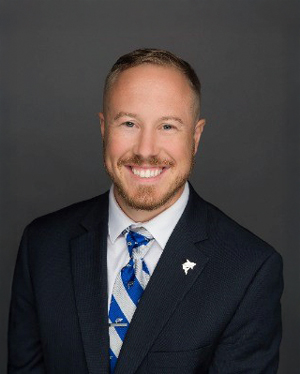
Program Director and Admissions Staff